
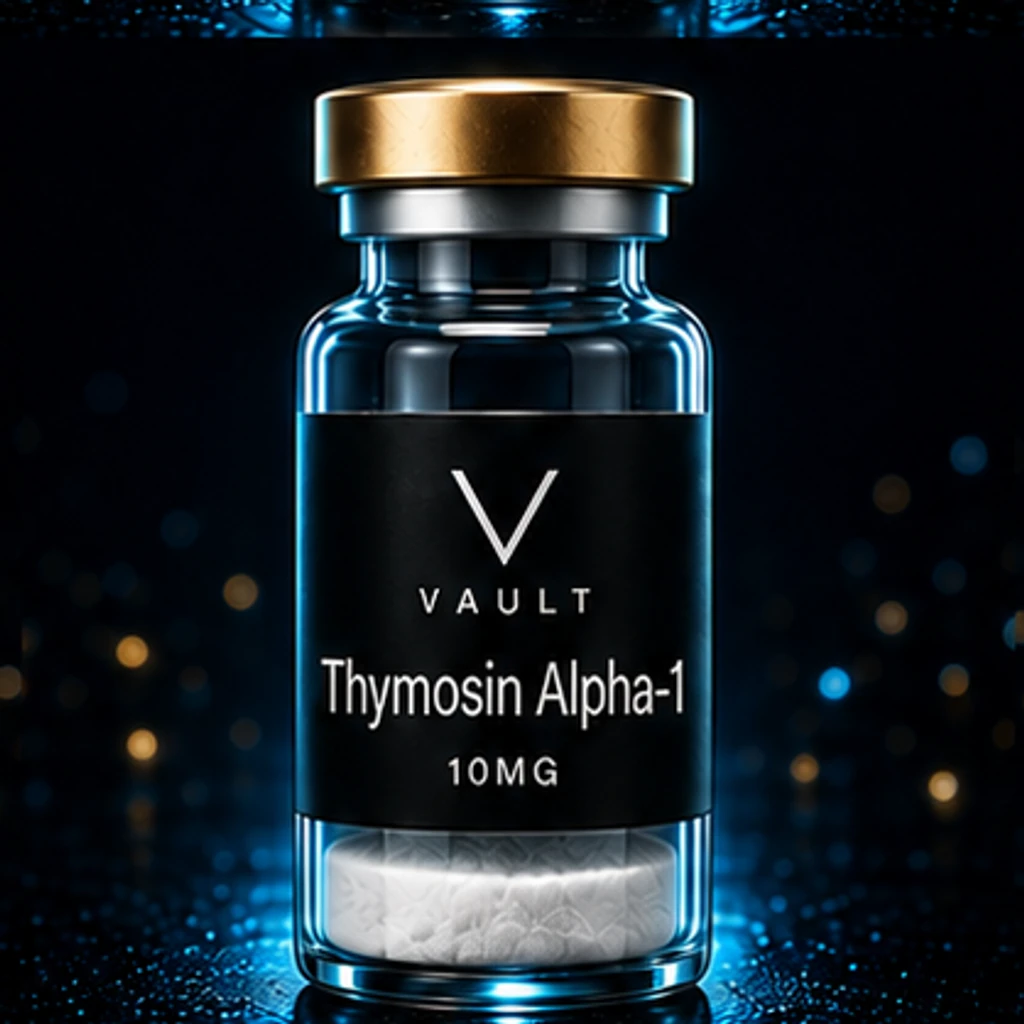
Immune Support
Thymosin Alpha-1
Independently lab-verified immune-support peptide, HPLC & LC-MS tested.
Strength
₱2,980.00 PHP
100 units in stock · SKU TA1-10
Independently lab-verified. HPLC & LC-MS tested. Ships nationwide across the Philippines.
Product information
Research summary
Thymosin alpha-1 is a 28-amino-acid peptide originally isolated from thymosin fraction 5, the thymic extract from which several thymic peptides were characterised. It is produced by cleavage of the precursor prothymosin alpha, and unlike the thymic complexes it is a single defined sequence with a fully characterised structure — an N-terminally acetylated, largely unstructured peptide in aqueous solution. Published research describes it as an immune modulator acting principally on the innate arm. Mechanistic work reports signalling through Toll-like receptors, particularly TLR9 and TLR2, on dendritic cells and monocytes, with downstream effects on dendritic cell maturation and cytokine production. Studies examine augmentation of T cell differentiation from precursors, natural killer cell activity, and MHC class I expression. It is among the best-characterised thymic peptides and has an extensive clinical literature in infectious disease and immune reconstitution contexts. Purity is determined by RP-HPLC and identity by LC-MS, with batch-specific chromatograms published for every lot.
Handling & reconstitution
Supplied lyophilised. Allow the vial to reach room temperature before opening. Reconstitute with bacteriostatic water added slowly against the vial wall. Thymosin alpha-1 is highly acidic — the sequence is rich in aspartate and glutamate — and is very water-soluble, dissolving readily with gentle swirling. Avoid acidic buffers, which reduce its solubility as the pH approaches the peptide's isoelectric point. Do not vortex.
Storage
Lyophilised: -20 °C, sealed, dry and protected from light. Reconstituted: 2–8 °C, used within approximately three to four weeks. The N-terminal acetylation blocks aminopeptidase attack and the sequence contains no cysteine or methionine, so it is more stable in solution than its length would suggest. Sterile technique matters most — microbial contamination and the proteases that come with it are the realistic spoilage route. Avoid freeze-thaw cycling.
Reviews
No reviews yet.