
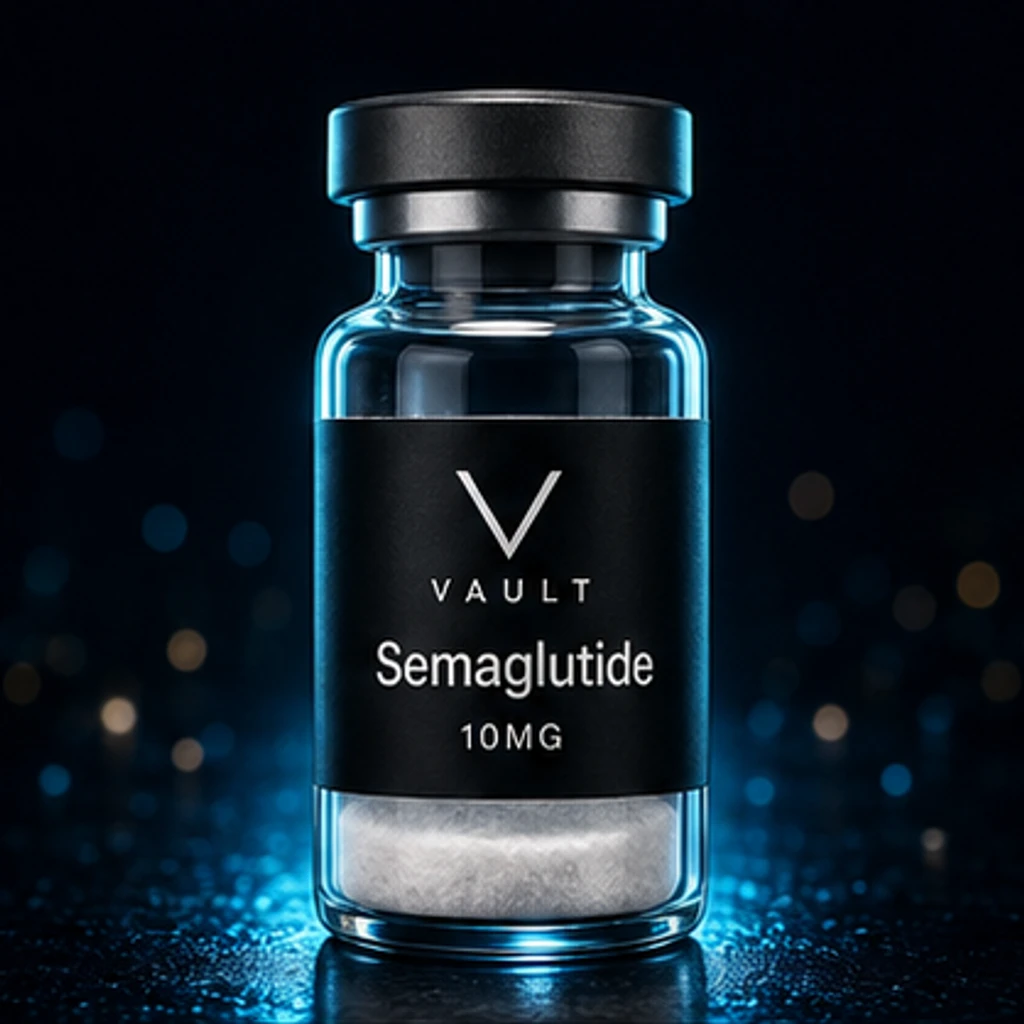
GLP-1 Agonist
Semaglutide
Independently lab-verified GLP-1 agonist, C18-acylated for extended half-life. HPLC & LC-MS tested, batch COA published.
Strength
₱3,200.00 PHP
100 units in stock · SKU SEMA-10
Independently lab-verified. HPLC & LC-MS tested. Ships nationwide across the Philippines.
Product information
Research summary
Semaglutide is a 31-amino-acid GLP-1 receptor agonist derived from human GLP-1(7-37) with three deliberate modifications: an α-aminoisobutyric acid substitution at position 8 that blocks dipeptidyl peptidase-4 cleavage, an arginine substitution at position 34, and a C18 fatty diacid conjugated via a spacer to the lysine at position 26. Together these confer strong reversible albumin binding and resistance to enzymatic degradation. In research settings it is used as a long-acting probe of GLP-1 receptor pharmacology. In-vitro studies examine cAMP accumulation, β-arrestin recruitment and receptor internalisation in transfected cell lines; islet and β-cell models are used to characterise glucose-dependent insulin secretion. Its extended half-life relative to native GLP-1 makes it a common reference compound when comparing incretin analogues. Purity is determined by RP-HPLC and identity confirmed by LC-MS, with a batch-linked Certificate of Analysis available for every lot we release.
Handling & reconstitution
Supplied as a lyophilised powder. Bring the vial to room temperature before reconstituting. Add bacteriostatic water slowly against the vial wall. Like other acylated GLP-1 analogues, semaglutide is surface-active and will foam readily if agitated — invert or swirl gently and give it a minute to go into solution rather than forcing it. A correctly reconstituted vial is clear and free of visible particles. Work with sterile technique throughout and wipe the septum with alcohol before each withdrawal.
Storage
Lyophilised: -20 °C, sealed and protected from light. The dry powder tolerates ambient shipping temperatures without loss of integrity. Reconstituted: 2–8 °C and used within roughly four to six weeks. Keep the vial out of direct light and avoid freeze-thaw cycling, which drives aggregation of the fatty-acid side chain.
Reviews
No reviews yet.