
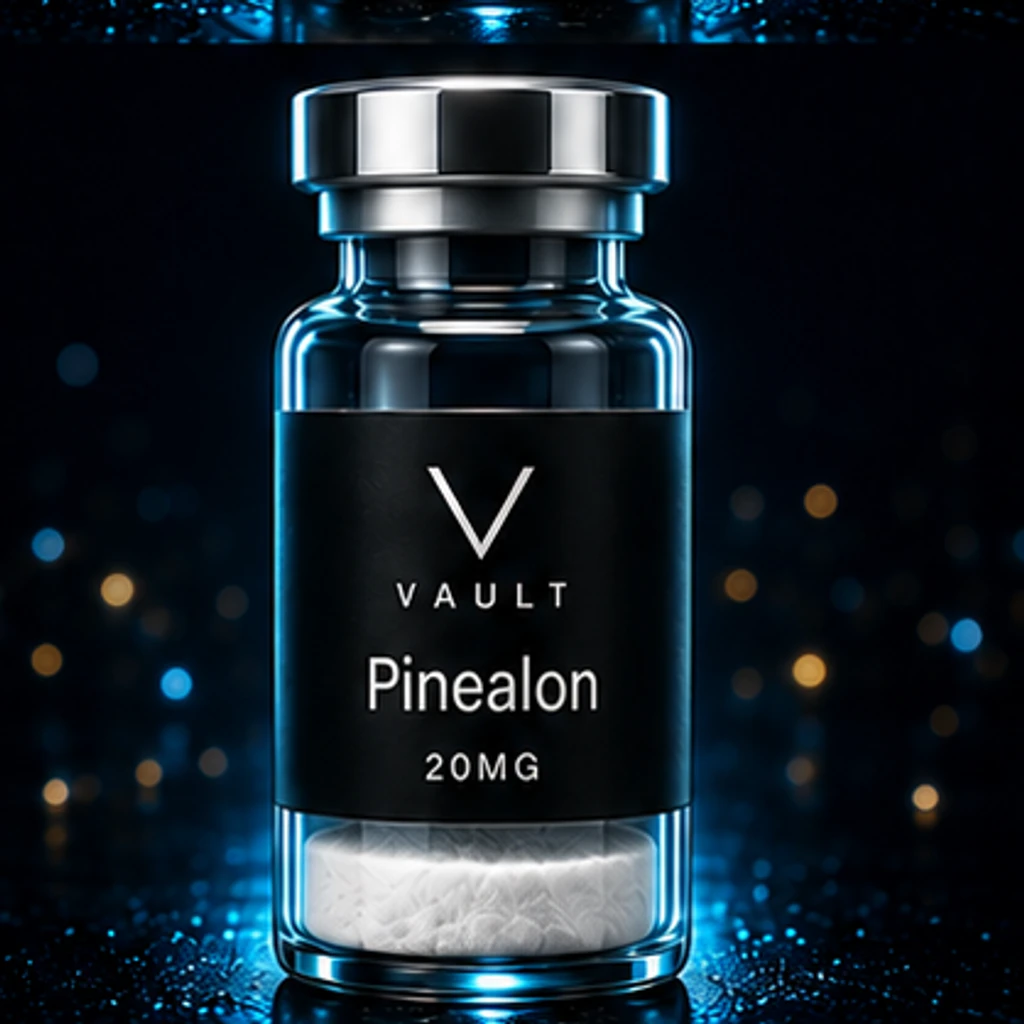
Bioregulator Peptide
Pinealon
Independently lab-verified Glu-Asp-Arg tripeptide bioregulator. HPLC & LC-MS tested, batch COA published.
Strength
₱2,400.00 PHP
100 units in stock · SKU PINL-20
Independently lab-verified. HPLC & LC-MS tested. Ships nationwide across the Philippines.
Product information
Research summary
Pinealon is a synthetic tripeptide — Glu-Asp-Arg — from the short peptide bioregulator class, developed as a defined-sequence compound with activity attributed to the pineal and central nervous tissue peptide fraction. At three residues it is among the shortest bioregulators studied. Published research, concentrated in Russian gerontology, describes penetration into the cell and nucleus and proposes interaction with specific DNA sequences as the basis for its effects on gene expression — the general mechanistic model advanced for this peptide class. Experimental work examines neuroprotection under hypoxic and oxidative stress in cell culture, effects on antioxidant enzyme activity, and outcomes in models of prenatal hypoxia. It is frequently studied alongside Epithalon and Cortagen as part of comparative work on sequence-specific bioregulator activity. Purity is determined by RP-HPLC and identity by LC-MS, with batch-linked analytical data published for every lot.
Handling & reconstitution
Supplied as a lyophilised powder in a light, easily disturbed cake. Bring the vial to room temperature before opening. Reconstitute with bacteriostatic water introduced slowly down the vial wall rather than onto the powder. Pinealon carries two acidic residues and an arginine, making it exceptionally water-soluble — it dissolves essentially on contact with a gentle swirl. The solution is clear and colourless.
Storage
Lyophilised: -20 °C, sealed and dry. Tripeptides are highly stable dry and tolerate ambient shipping without measurable loss. Reconstituted: 2–8 °C, used within approximately four weeks. No oxidation-sensitive residues are present, so the practical limits are microbial contamination and slow hydrolysis rather than chemical degradation. Maintain sterile technique on every withdrawal and avoid freeze-thaw cycling.
Reviews
No reviews yet.