
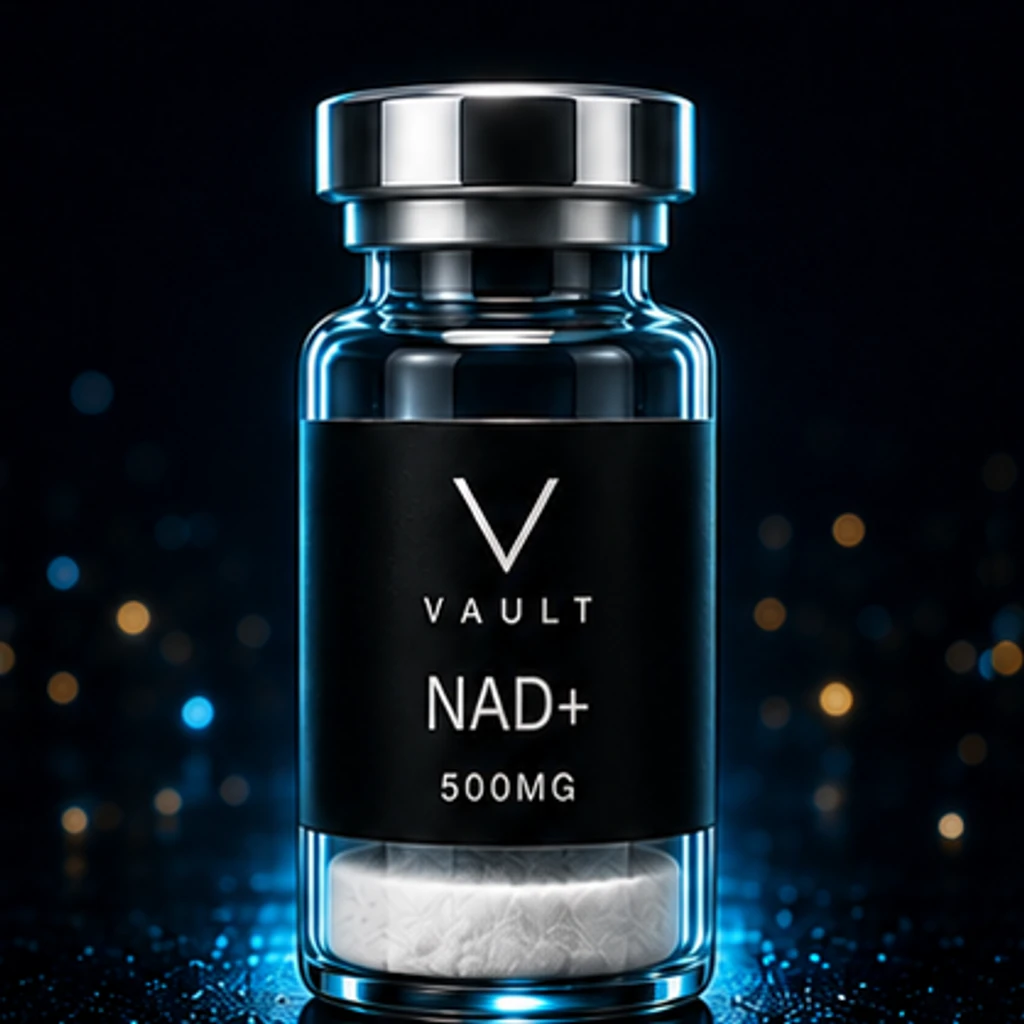
Cellular Energy Cofactor
NAD+
Independently lab-verified nicotinamide adenine dinucleotide, HPLC & LC-MS tested.
Strength
₱3,900.00 PHP
100 units in stock · SKU NAD-500
Independently lab-verified. HPLC & LC-MS tested. Ships nationwide across the Philippines.
Product information
Research summary
NAD+ is nicotinamide adenine dinucleotide in its oxidised form — a dinucleotide cofactor rather than a peptide, included here as a companion to the mitochondrial compounds it functions alongside. It is present in every living cell and is central to metabolism. Its research significance is twofold. As a redox cofactor it cycles between NAD+ and NADH, carrying electrons through glycolysis, the citric acid cycle and oxidative phosphorylation. Separately, and more recently, it functions as a consumed substrate for enzymes including the sirtuin deacetylases and PARPs, which cleave it and release nicotinamide — meaning cellular NAD+ is continuously depleted and must be resynthesised. Published work documents declining tissue NAD+ concentrations with age and examines the consequences for sirtuin-dependent signalling, mitochondrial function and DNA repair capacity. Precursor and repletion strategies are the largest active area. Each lot is assayed by HPLC for purity and confirmed by mass spectrometry, with batch-linked data published for every release.
Handling & reconstitution
Supplied lyophilised. NAD+ is markedly more chemically demanding than the peptides in this catalogue and needs different handling. The powder is strongly hygroscopic — it draws atmospheric moisture rapidly, and absorbed water accelerates its breakdown. Open the vial only after it has fully reached room temperature, keep it open for as short a time as possible, and reseal immediately. Reconstitute with sterile or bacteriostatic water; dissolution is fast. Note that NAD+ is unstable at alkaline pH and degrades quickly above neutral, so avoid alkaline buffers entirely. The solution should be clear and colourless to very faintly yellow; pronounced yellowing indicates degradation.
Storage
Lyophilised: -20 °C, tightly sealed, dry and protected from light. Desiccated storage genuinely matters here in a way it does not for most compounds — moisture ingress is the primary cause of loss. Reconstituted: this is the important difference from the peptides. NAD+ in aqueous solution is considerably less stable than a peptide and hydrolyses steadily even at 2–8 °C. Prepare solutions close to the time of use and hold them for days rather than weeks. If storage is unavoidable, aliquot and freeze immediately at -20 °C or below, thaw once, and protect from light throughout.
Reviews
No reviews yet.