
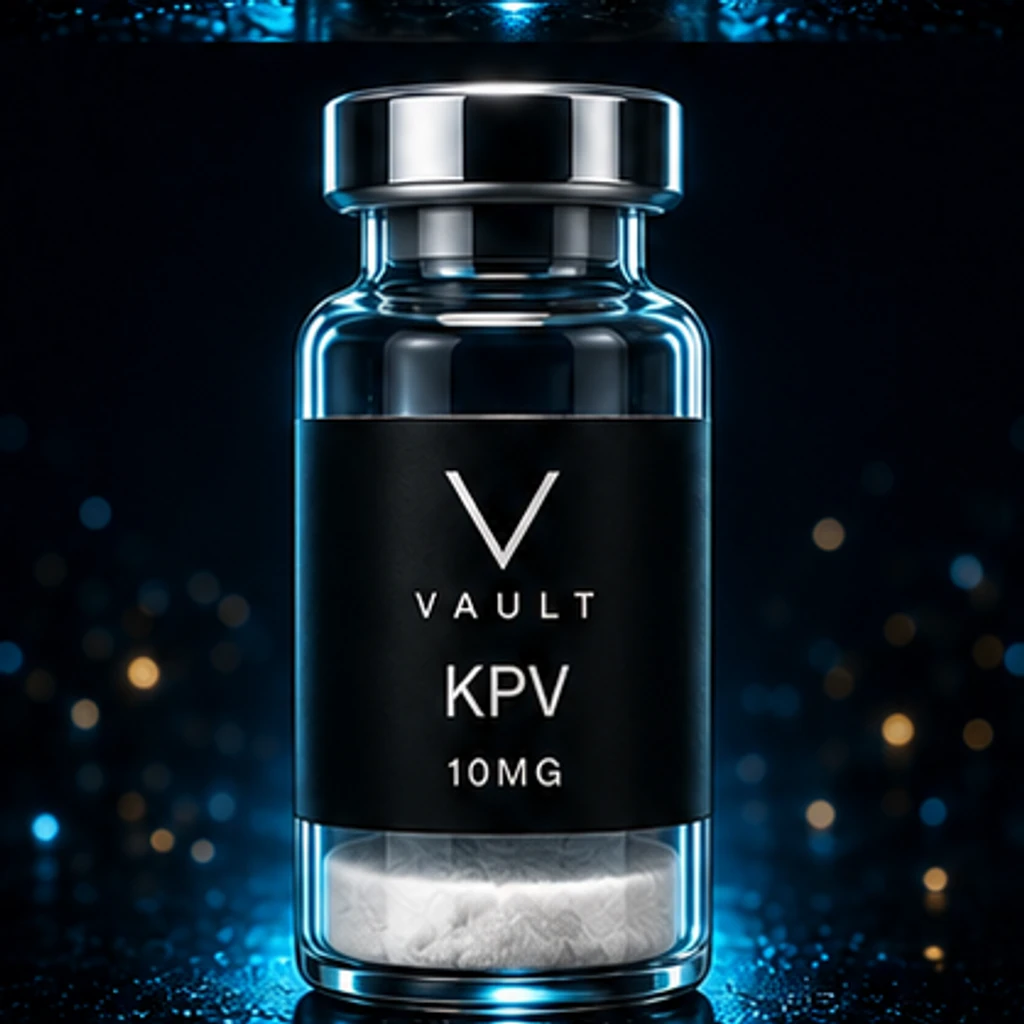
Anti-Inflammatory Peptide
KPV
Independently lab-verified alpha-MSH tripeptide fragment, HPLC & LC-MS tested.
Strength
₱2,050.00 PHP
100 units in stock · SKU KPV-10
Independently lab-verified. HPLC & LC-MS tested. Ships nationwide across the Philippines.
Product information
Research summary
KPV is a tripeptide — lysine-proline-valine — corresponding to the C-terminal three residues of alpha-melanocyte-stimulating hormone. It is the smallest fragment of α-MSH that retains the parent hormone's anti-inflammatory activity, and it does so without the melanocortin receptor binding that drives α-MSH's pigmentary and other systemic effects. That dissociation is the reason it is studied separately. Published in-vitro work describes activity that appears to be at least partly intracellular rather than receptor-mediated, with the peptide entering cells and interfering with NF-κB nuclear translocation and downstream pro-inflammatory cytokine transcription. Research models concentrate on intestinal epithelial inflammation, where uptake via the PepT1 transporter has been described, and on cutaneous inflammatory models. Its antimicrobial activity, inherited from the parent hormone, forms a smaller parallel literature. Each lot is analysed by RP-HPLC for purity and LC-MS for identity, with the certificate tied to the batch number.
Handling & reconstitution
Supplied as a lyophilised powder. Bring the vial to room temperature before opening. Reconstitute with bacteriostatic water. As a tripeptide, KPV is the smallest and most readily soluble compound in the catalogue — it dissolves almost immediately with a gentle swirl. Because the cake is very light, add the diluent slowly against the wall rather than directly onto the powder. The solution should be clear and colourless.
Storage
Lyophilised: -20 °C, sealed and dry. Very short peptides are highly stable in the dry state, and KPV tolerates ambient shipping comfortably. Reconstituted: 2–8 °C, used within approximately four to six weeks. KPV is among the most stable compounds here in aqueous solution — there are no oxidation-prone residues in the sequence — but it should still be kept refrigerated and handled with sterile technique to prevent microbial growth, which is the more likely spoilage route.
Reviews
No reviews yet.