
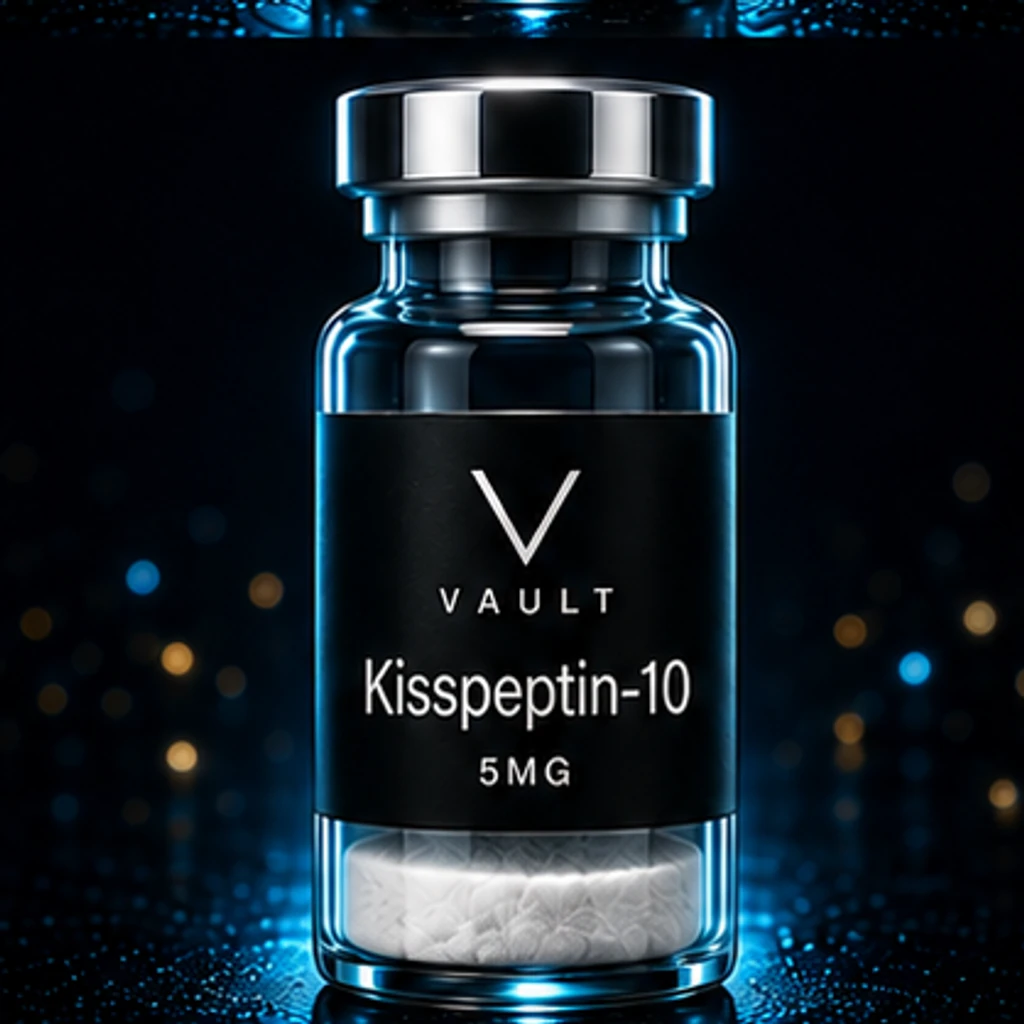
Reproductive Peptide
Kisspeptin-10
Independently lab-verified kisspeptin decapeptide, HPLC & LC-MS tested.
Strength
₱2,600.00 PHP
100 units in stock · SKU KISS-5
Independently lab-verified. HPLC & LC-MS tested. Ships nationwide across the Philippines.
Product information
Research summary
Kisspeptin-10 is the C-terminal decapeptide fragment of kisspeptin-54, the product of the KISS1 gene, and retains the full biological activity of the longer forms at the receptor. It signals through KISS1R, a G protein-coupled receptor formerly designated GPR54. Its research significance was established by human genetics: loss-of-function mutations in KISS1R were found to cause hypogonadotropic hypogonadism, identifying kisspeptin signalling as an obligatory upstream regulator of the reproductive axis. Published work places it above GnRH in that hierarchy, acting on GnRH neurons in the hypothalamus to drive pulsatile secretion, and describes it as the point at which metabolic and environmental signals — including leptin status — are integrated into reproductive control. In-vitro studies characterise KISS1R binding and downstream Gq/phospholipase C signalling. A separate literature examines KISS1 as a metastasis suppressor gene, the context in which it was originally discovered. Every lot is analysed by RP-HPLC and confirmed by LC-MS, with the certificate published against the batch number.
Handling & reconstitution
Supplied as a lyophilised powder. Bring the vial to room temperature before reconstituting. Reconstitute with bacteriostatic water added slowly down the inner wall. Kisspeptin-10 is a basic peptide with several arginine residues, which makes it readily water-soluble but also prone to adsorption onto glass and standard plastics at low concentrations — use low-binding tubes for dilute working solutions and prepare them close to the time of use. Swirl gently; do not vortex. The solution should finish clear.
Storage
Lyophilised: -20 °C, sealed, dry and protected from light. Reconstituted: 2–8 °C, used within approximately two to three weeks. The sequence contains a tryptophan and a tyrosine, both oxidation-sensitive, so protect from light and minimise air exposure. For work beyond that window, aliquot into single-use low-binding vials and freeze once at -20 °C.
Reviews
No reviews yet.