
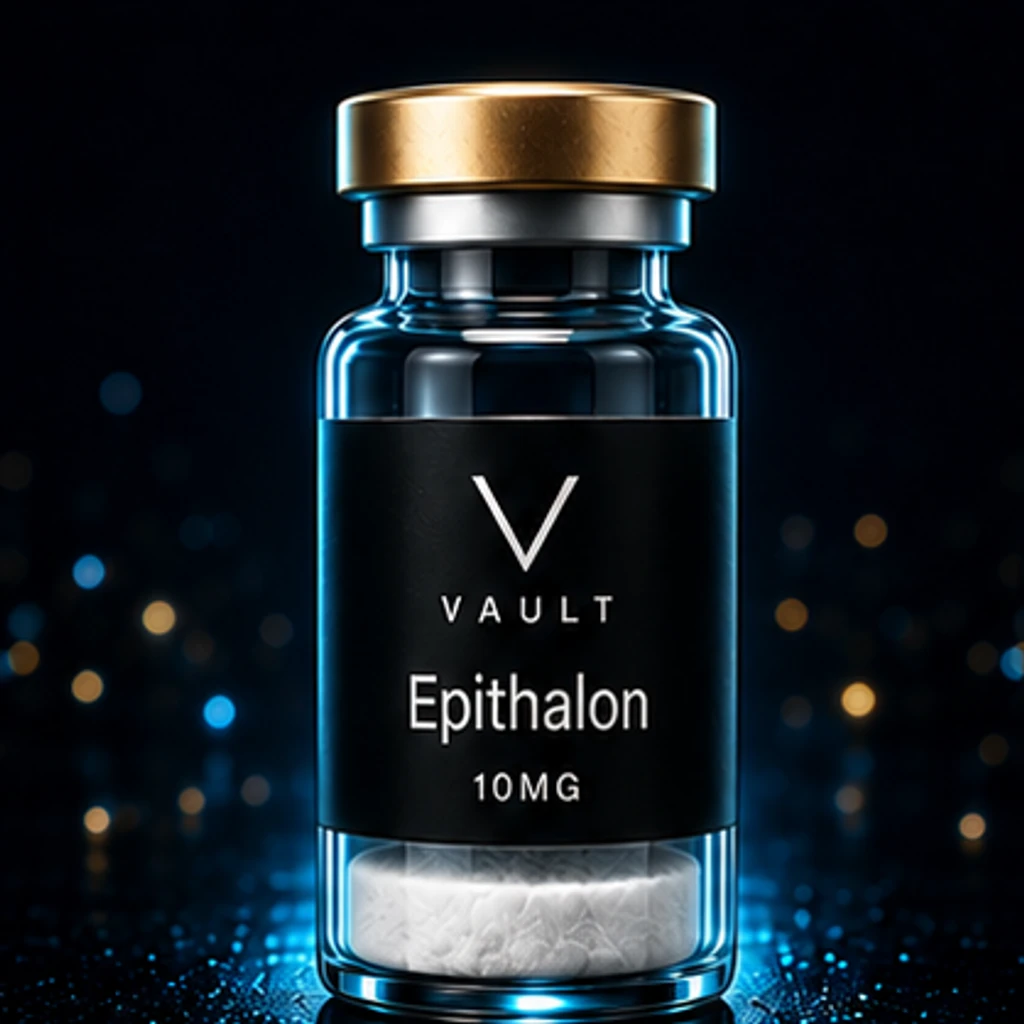
Telomerase Activator
Epithalon
Independently lab-verified telomerase activator, HPLC & LC-MS tested.
Strength
₱3,100.00 PHP
100 units in stock · SKU EPI-10
Independently lab-verified. HPLC & LC-MS tested. Ships nationwide across the Philippines.
Product information
Research summary
Epithalon is a synthetic tetrapeptide — Ala-Glu-Asp-Gly — constructed as the defined-sequence equivalent of the active fraction of epithalamin, a pineal gland peptide extract. It is the most studied member of the short peptide bioregulator class. Research interest centres on telomere biology. Published in-vitro work reports induction of telomerase catalytic subunit expression and telomere elongation in somatic cell culture, which is the finding the compound is principally known for. Separate studies examine effects on melatonin secretion rhythm and circadian regulation, consistent with its pineal origin, and on antioxidant enzyme expression. As with other bioregulator peptides, the proposed mechanism involves sequence-specific interaction with DNA and modulation of gene expression rather than classical receptor binding — a model still under active investigation. Every lot is assayed by RP-HPLC for purity and confirmed by LC-MS for identity, with chromatograms published against the batch number on the vial.
Handling & reconstitution
Supplied as a lyophilised powder, typically a very light cake. Bring the vial to room temperature before opening. Reconstitute with bacteriostatic water introduced slowly down the inner wall — added directly onto a cake this light, the stream will disperse the powder up the vial. Epithalon is extremely water-soluble and dissolves almost immediately with a gentle swirl. The finished solution is clear and colourless.
Storage
Lyophilised: -20 °C, sealed and dry. Tetrapeptides are among the most stable compounds in the catalogue in the dry state and tolerate shipping at ambient temperature comfortably. Reconstituted: 2–8 °C, used within approximately four weeks. The sequence contains no oxidation-prone residues, so chemical degradation is slow; sterile technique matters more than temperature here, since microbial growth is the realistic spoilage route. Avoid freeze-thaw cycling.
Reviews
No reviews yet.